Insulin Dynamics Following Carbohydrate Consumption
Understanding the hormonal response to carbohydrate intake: mechanisms, regulatory factors, and physiological significance of insulin secretion.
Introduction
When carbohydrates are consumed and absorbed, blood glucose rises, triggering a coordinated hormonal response centered on insulin secretion. This article explains the mechanisms of insulin release, factors that influence the magnitude and duration of insulin response, and the physiological significance of insulin in glucose homeostasis.
The Glucose-Sensing Mechanism
The pancreatic beta cells, located in clusters called islets of Langerhans, function as glucose sensors. When blood glucose concentration rises above the fasting baseline (approximately 70-100 mg/dL), glucose enters beta cells through GLUT2 transporters and is phosphorylated by glucokinase. The metabolism of this glucose generates ATP, which closes ATP-sensitive potassium channels in the beta cell membrane.
Channel closure depolarizes the cell membrane, opening calcium channels and allowing calcium to enter the cell. Elevated intracellular calcium triggers the secretion of stored insulin granules into the bloodstream. This elegant mechanism directly links blood glucose concentration to insulin secretion—as glucose rises, more insulin is released.
Phases of Insulin Secretion
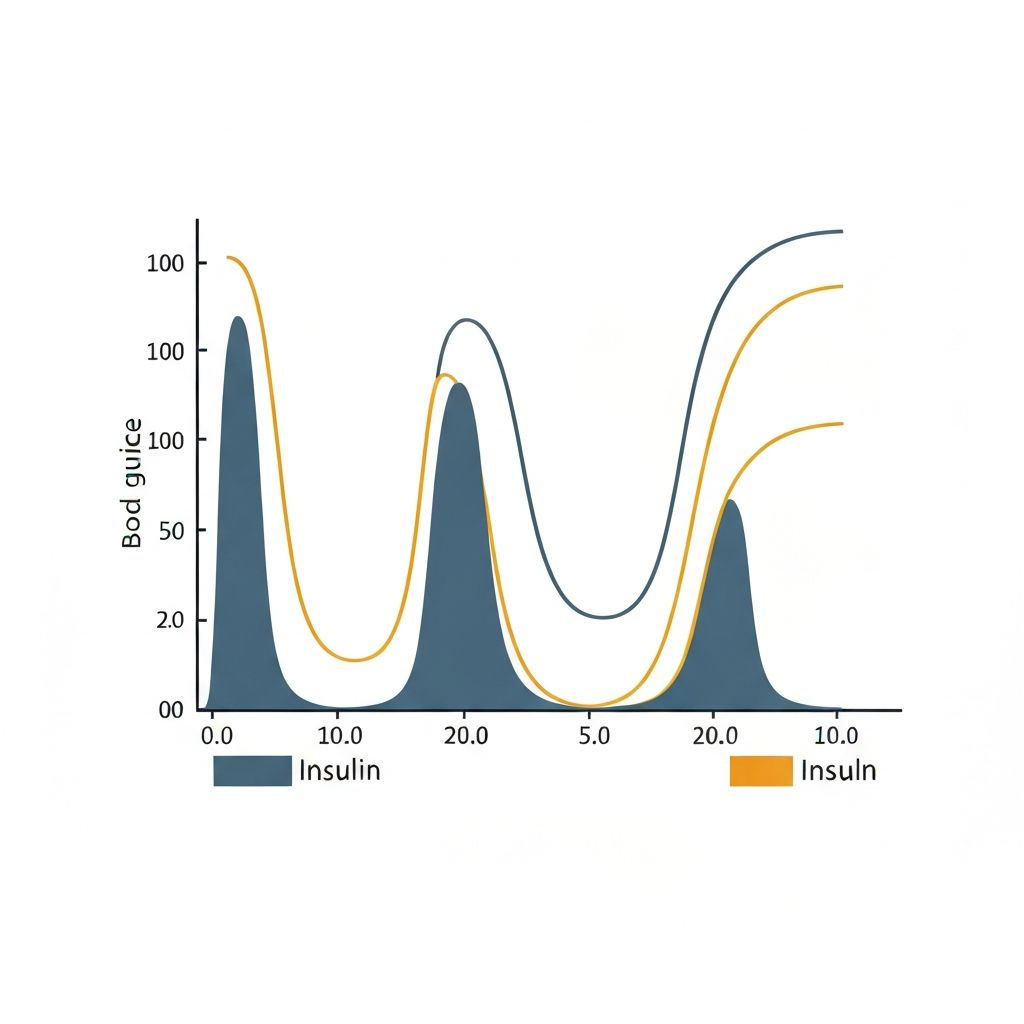
First-phase insulin release occurs rapidly (within 5-10 minutes of glucose elevation) as pre-formed insulin is released from granules. This rapid response is proportional to the magnitude of glucose rise and serves to immediately counteract hyperglycemia.
Second-phase insulin secretion occurs over 10-60 minutes as new insulin is synthesized and released. This sustained response maintains suppression of hepatic glucose production and promotes glucose utilization until blood glucose returns to baseline.
Factors Influencing Insulin Response
The magnitude and duration of insulin response to identical carbohydrate loads varies considerably based on multiple factors:
- Carbohydrate type: Simple sugars typically produce more rapid and pronounced insulin responses than complex carbohydrates
- Glycemic index: High-GI foods produce larger insulin responses than low-GI foods
- Macronutrient composition: Protein and fat slow carbohydrate digestion and moderate insulin response when consumed together with carbohydrates
- Physical fitness: Individuals with high aerobic fitness and muscle mass typically exhibit better insulin sensitivity and lower insulin responses to glucose loads
- Insulin sensitivity: Individuals with insulin resistance show exaggerated insulin responses to glucose loads compared to insulin-sensitive individuals
- Time of day: Circadian rhythms influence insulin secretion patterns and glucose tolerance
- Physical activity: Recent exercise enhances insulin sensitivity and reduces insulin response to subsequent carbohydrate intake
Systemic Effects of Insulin
Once released, insulin circulates throughout the body, binding to insulin receptors on target tissues including muscle, adipose tissue, and liver. In muscle, insulin promotes glucose uptake via translocation of GLUT4 transporters to the cell membrane, facilitating glucose entry for metabolism or glycogen storage. In adipose tissue, insulin promotes glucose uptake and fatty acid synthesis. In the liver, insulin promotes glycogen synthesis and inhibits glucose production.
In healthy individuals, these coordinated responses cause blood glucose to return to baseline within 2-3 hours after carbohydrate consumption. This represents normal metabolic regulation rather than pathology.
Insulin Sensitivity and Resistance
Insulin sensitivity refers to the responsiveness of cells to insulin signaling—that is, how effectively insulin promotes glucose uptake and storage. Insulin-sensitive individuals show efficient glucose clearance with modest insulin secretion. Insulin resistance occurs when cells respond less effectively to insulin, requiring higher insulin concentrations to achieve equivalent glucose clearance.
Insulin sensitivity is influenced by physical fitness, total body fat, muscle mass, diet composition over time, and genetic factors. Regular aerobic exercise and resistance training enhance insulin sensitivity. Conversely, sedentary behavior and excessive weight gain promote insulin resistance.
Long-Term vs Acute Responses
Important distinction: insulin response to a single carbohydrate meal reflects acute hormonal dynamics. Long-term health outcomes depend on chronic energy balance and lifestyle factors, not on the acute insulin response to any single meal. Studies examining chronic weight outcomes show that diet composition (including carbohydrate percentage) produces minimal effects when total calories are controlled, indicating that the repeated daily insulin responses to carbohydrates do not independently determine weight outcomes.
Individual Variation
Insulin responses to identical carbohydrate loads vary significantly between individuals due to differences in insulin sensitivity, beta cell function, physical fitness, and metabolic state. This individual variation is normal and reflects each person's unique physiological characteristics. No single insulin response pattern represents the "correct" or "optimal" response; rather, variation reflects normal human metabolic diversity.
Conclusion
Insulin secretion following carbohydrate consumption represents a fundamental physiological response that maintains blood glucose homeostasis. The magnitude, duration, and characteristics of this response are influenced by multiple factors and vary considerably between individuals. Understanding insulin dynamics provides important context for comprehending carbohydrate metabolism and glucose regulation, contributing to evidence-based understanding of carbohydrate nutrition.